
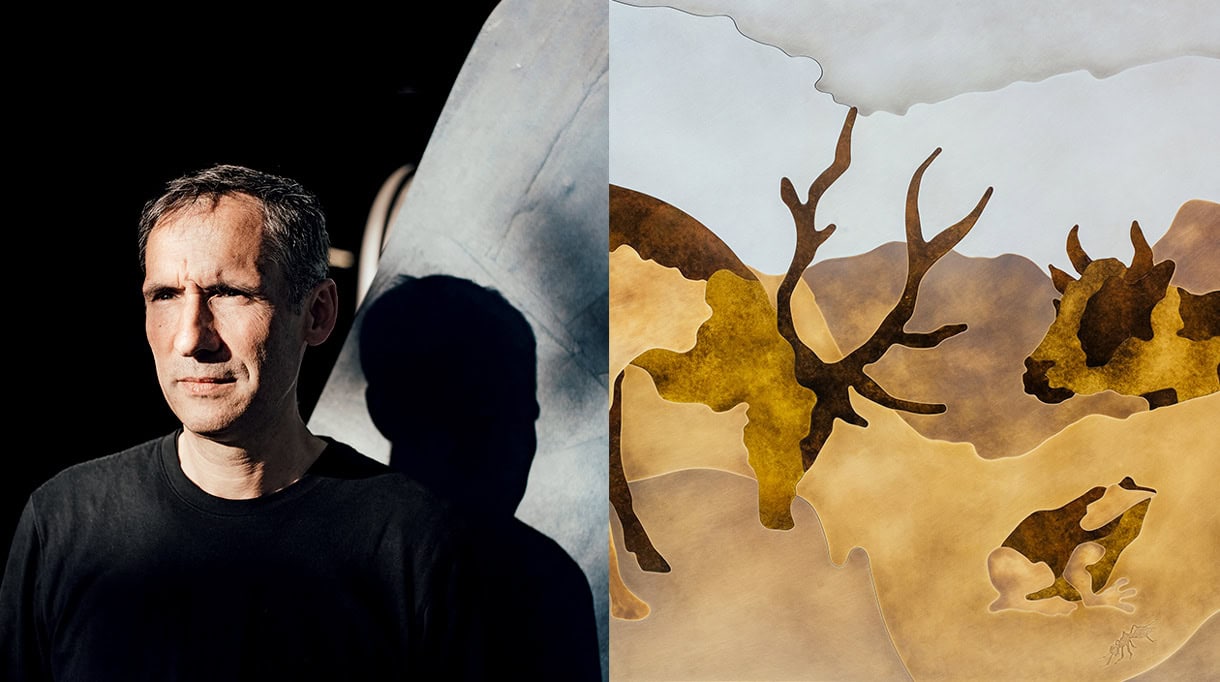
Trained as an ornamental metalworker, Steaven Richard has gradually expanded his creative horizons, transforming metal into a true medium for artistic expression. From his workshop in Valenton, near Paris, he works with architects, interior designers and product designers to bring bespoke projects to life, combining traditional craftsmanship, experimentation and innovation. Before opening his Paris workshop in 2001, Steaven Richard spent nearly ten years travelling across Europe. It was the 1990s, a time when borders were opening and exchanges between craftspeople were becoming increasingly frequent. For the young metalworker, this period proved to be an extraordinary learning experience. “The possibilities were expanding,” he recalls.
He discovered new working methods, different artistic sensibilities and a wide range of craft traditions. Above all, this experience taught him that certain skills cannot be acquired through art history books alone: they are learned through direct contact with workshops, craftspeople and building sites. He often refers to the restoration of the gates at Karlsruhe Palace in Germany, whose designs were French while their execution was German. The project illustrates the cross-cultural exchanges and transmission of knowledge that continue to shape the decorative arts and traditional craftsmanship. This open-minded approach still informs his work today, balancing precision of execution with a constant search for new techniques and processes.
Above: Steaven Richard. ©Nicolas Anglade
Steaven Richard: an Artisan at the Forefront of Innovation
Upon returning to France, Steaven Richard wanted to do more than practise ornamental metalwork: he wanted to redefine its conventions. His ambition was to create an environment that would encourage innovation. To achieve this, he brought together complementary skill sets, introduced machinery not traditionally associated with an ornamental metalwork workshop and built a team of professionals from diverse backgrounds. Today, around twelve specialists—including technicians and experts in metal assembly and material processing—contribute to the workshop’s ongoing research and development. This approach reached a decisive turning point in 2013, when a commission from Karl Lagerfeld led him to create a textured nickel silver Versailles parquet floor for Lagerfeld’s studio at Chanel.
To fulfil the brief, he repurposed a rolling mill, adapting its use to achieve a new artistic result. The project proved to be a major catalyst: years of research culminated in the development of artistic metal rolling, a distinctive technique that opened up new creative possibilities for metal. Several processes developed by the workshop are now protected by patents. The workshop’s commitment to research, craftsmanship and quality had already been recognised in 2011, when it received the Entreprise du Patrimoine Vivant (EPV) label, a French government distinction celebrating excellence in traditional and industrial craftsmanship. That same year, the workshop joined Grands Ateliers de France, a network bringing together more than sixty exceptional craft workshops recognised by their peers.
Atelier Steaven Richard: Bespoke Architectural Metalwork for Architects
Steaven Richard often describes his craft as a “dialogue with metal”. This expression captures the essence of his approach. The dialogue begins with the architect or interior designer, as he seeks to understand the creative intention behind each project. It then continues with the material itself, which he shapes and transforms into textures, reliefs and finishes capable of bringing that vision to life. His role is not to impose a signature style, but to translate an idea into a language of metal. Today, this approach takes the workshop to projects around the world. From London and Zurich to Rome, Stockholm and New York, the materials and finishes selected for each commission are carefully adapted to local cultures, architectural contexts and aesthetic sensibilities. Whether creating bespoke metal wall cladding, a monumental staircase or an elevator transformed into an architectural feature in its own right, Steaven Richard pursues the same ambition: to translate architects’ visions into the language of metal, combining exceptional craftsmanship with technical innovation and a highly personalised approach to architectural design.

 Interview with Steaven Richard, a frieze inspired by La Fontaine’s Fables.
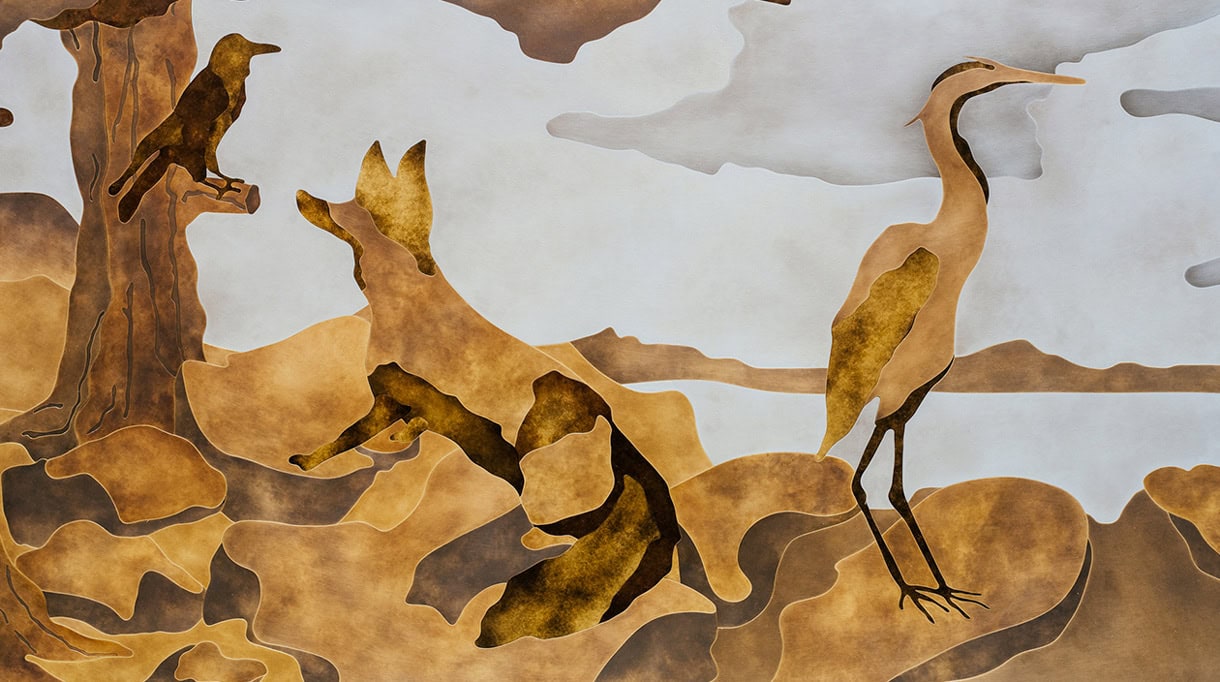
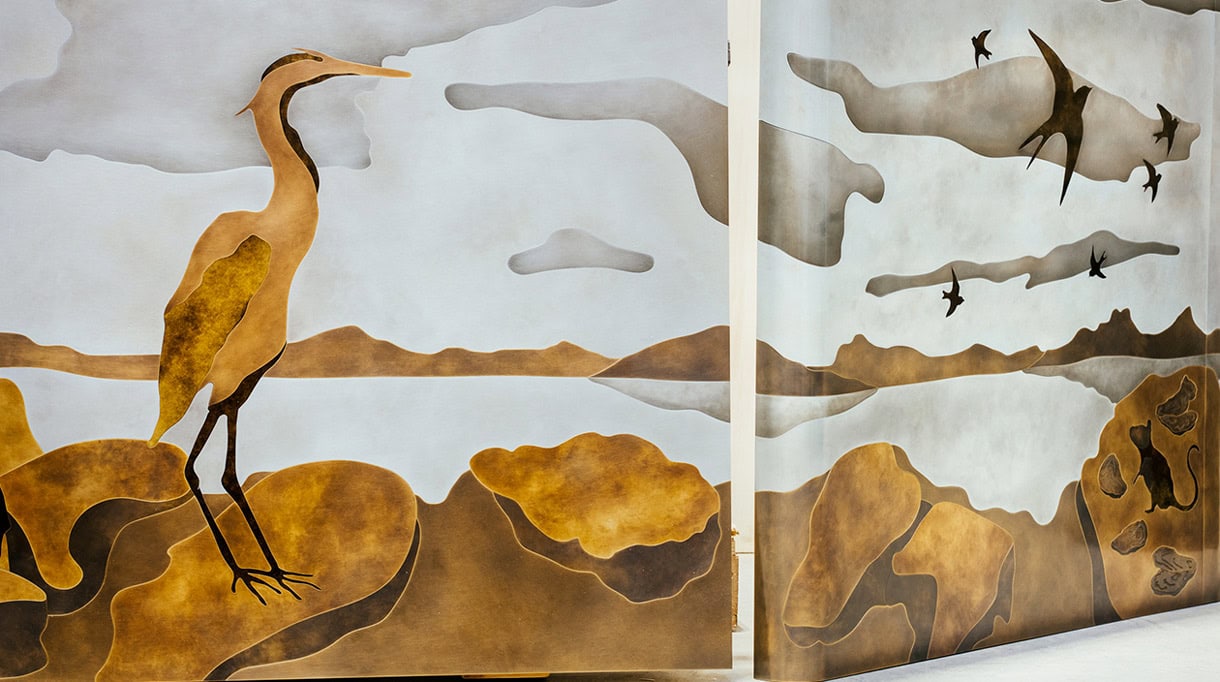
Crafted to measure in brass and patinated zinc, this frieze inspired by La Fontaine’s Fables adorns the façade of a bar designed by London-based architecture firm MDBS Architects. Steaven Richard discusses the origins of this bespoke creation and the artistic choices that shaped its design.
How did this frieze come about?
Steaven Richard: it’s quite an unusual project. Few French architects would have instinctively chosen La Fontaine’s Fables as a source of inspiration. We all grew up with these stories, but transforming them into a decorative feature is a very different exercise. The team at London-based MDBS Architects had no preconceived ideas about the work. They proposed the theme and, very quickly, gave us considerable creative freedom. Their role was that of an orchestra conductor: ensuring that our proposals remained consistent with the surrounding space while allowing us to explore our ideas freely.
How did you translate this literary world into metal?
Steaven Richard: first, we had to find the right balance. Above all, we wanted to avoid an overly figurative representation. The idea was to create some distance from the original fables and render the animals more abstract through the arrangement of the metal panels and the use of patinas. Once we had established this visual language, we were able to compose the overall decorative design.
Why did you choose certain fables over others?
Steaven Richard: not all the fables are represented. We selected the best-known ones, as well as those featuring animals that lent themselves particularly well to a decorative interpretation.
What were the main challenges involved in bringing the design to life?
Steaven Richard: the first was artistic: to create a sense of distance from the fables without falling into overly literal illustration. The second was technical, particularly in the curved sections, where we had to adapt the entire panel layout to follow the contours.
What do you hope to convey through this work?
Steaven Richard: we are working within the realm of decorative arts. The aim is not to tell a story, but to create artistic harmony and offer visual pleasure.
©Nicolas Anglade
Atelier Steaven Richard
371 rue des Chênes
77590 Chartrettes
Tél. : +33 (0)1 64 81 16 17
www.steavenrichard.fr

